What Are Cancer Driver Genes?
Not all genetic changes in cancer cells are equal. Driver genes actively push cells toward uncontrolled growth. Understanding them is key to modern cancer genetics.
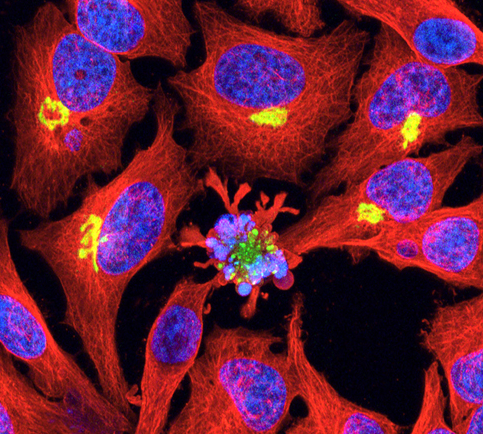
Cancer develops when cells accumulate changes that allow them to grow and divide without normal controls. But not all genetic changes in a cancer cell are equally important. The concept of driver genes helps explain which changes actually matter.
Somatic vs. Germline Mutations
Before discussing driver genes, it helps to distinguish two types of genetic changes:
Somatic mutations arise in individual cells during a person's lifetime. They are not inherited and are not present in every cell of the body — only in the cell where the change occurred and its descendants. Most cancer-causing mutations are somatic.
Germline mutations are present in every cell of the body because they were inherited from a parent or arose very early in development. Germline mutations in cancer-risk genes — such as BRCA1, BRCA2, or MLH1 — can be passed to children.
Driver Genes and Passenger Mutations
A cancer cell typically contains hundreds or thousands of genetic changes. Most of these are passenger mutations — changes that happened to be present in a cell when it divided but do not themselves contribute to cancer growth.
Driver genes are genes in which mutations actively contribute to cancer development. A mutation in a driver gene gives the cell a growth advantage — it may help the cell divide faster, avoid programmed cell death, or escape normal growth controls.
Driver genes fall into two broad categories:
Oncogenes are genes that, when mutated or overexpressed, actively promote cell growth. Think of them as an accelerator stuck in the "on" position. KRAS, EGFR, and HER2 are examples.
Tumor suppressor genes normally act as brakes on cell division or help repair DNA. When both copies of a tumor suppressor are inactivated, those brakes fail. TP53, BRCA1, BRCA2, RB1, and the mismatch repair genes are examples.
The Two-Hit Hypothesis
For tumor suppressor genes, cancer typically requires inactivation of both copies — one from each chromosome. This is the basis of the two-hit hypothesis proposed by Alfred Knudson.
In hereditary cancer syndromes, a person inherits one already-inactivated copy of a tumor suppressor gene. Only one additional somatic "hit" is needed to inactivate the second copy. This explains why people with germline variants in tumor suppressor genes have a higher lifetime cancer risk — they start with one hit already in place.
Why Driver Genes Matter for Genetic Testing
Germline genetic testing looks for inherited variants in known cancer driver genes. Finding a pathogenic variant in a gene like BRCA1 or MLH1 does not mean cancer is present — it means the normal protective function of that gene may be compromised, raising the risk that a somatic second hit could eventually occur in some cells.
At Genetic Insights, we help patients understand what a pathogenic variant in a cancer driver gene actually means for their risk — and what surveillance, prevention, or treatment options may be appropriate.
Key Takeaway: Driver genes are genes in which mutations actively promote cancer. Oncogenes act as stuck accelerators; tumor suppressors act as failed brakes. Germline variants in tumor suppressor genes raise cancer risk by reducing the number of hits needed to disable a critical protective mechanism.
Sources: NCI Cancer Genetics Overview; [Knudson AG. Mutation and cancer. PNAS. 1971.]
Explore Topics
Written by
Dr. Michael P. Vaughn
Content creator and writer sharing insights and stories.